Three Mini Soil Experiments to Read Your Garden: A Practical Guide
Understanding the soil in your garden is one of the most practical skills for home growers. Soil affects water retention, root development, and nutrient availability, so a few simple experiments can turn guesses into useful decisions. These three mini experiments—texture, drainage, and pH indicator—are designed to be done with everyday materials and to build on one another. Each experiment is small, takes from a few minutes to a day, and gives clear observations you can act on.
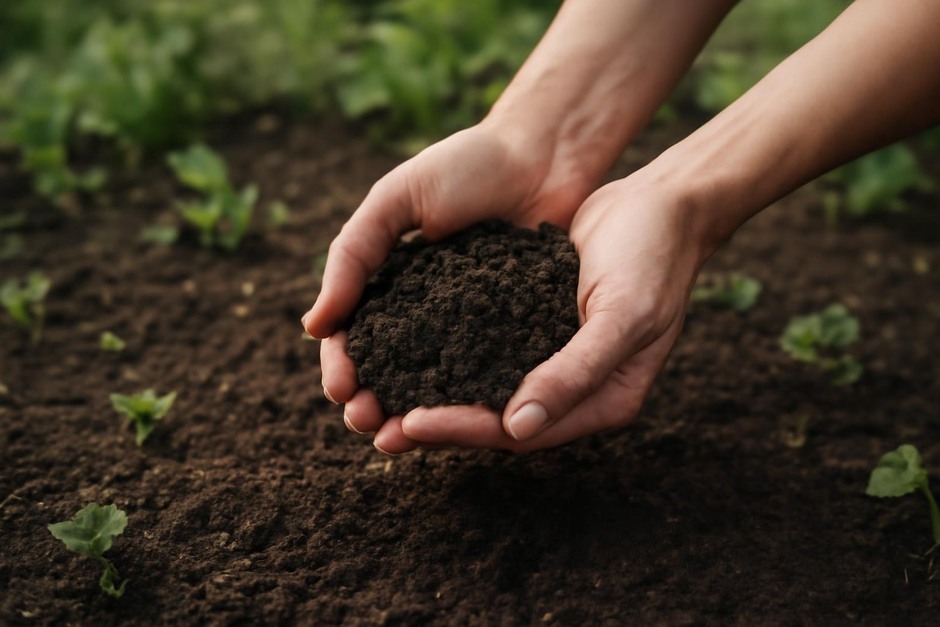
Experiment 1: The Feel-and-Form Texture Test
Principle: Soil texture—the relative amounts of sand, silt, and clay—determines how it feels and how water and roots move through it. This tactile test gives a quick, qualitative sense of your soil.
What you need
- A handful of moist soil (not dripping wet)
- A clean surface and a small jar or bowl
Steps
- Take a small amount of soil, remove large stones and roots, and moisten it slightly if dry.
- Rub the soil between your fingers.
- Try to form a short ribbon by pressing and sliding the soil between your thumb and forefinger.
What to observe
- If the soil feels gritty and won’t hold together, it is sandy. It drains quickly and warms fast but holds little nutrient.
- If it feels smooth and silky and holds a short ribbon, it has more silt. It holds moisture but can crust when dry.
- If it feels sticky and makes a long, flexible ribbon, it is clay-rich. It holds water and nutrients but drains slowly and can become compacted.
Next step: Use this impression when choosing plants and amendments. Sandy soils benefit from organic matter; clay soils often need structure-improving materials and careful cultivation.
Experiment 2: The 24-Hour Drainage (Percolation) Test
Principle: Knowing how quickly water moves through your soil helps decide whether to improve drainage, change planting depth, or choose moisture-loving plants.
What you need
- A small test hole or a container buried in the soil (about 20 cm deep and 10 cm wide)
- Water and a measuring stick
Steps
- Dig a hole about 20 cm deep or set a container flush with the soil surface.
- Fill the hole with water and let it drain completely. This saturates the nearby soil.
- Refill the hole to a known depth (for example, 10 cm). Note the time.
- Check how much the water level has dropped after 1 hour and again after 24 hours.
What to observe
- If water drops several centimeters in an hour and empties within a few hours, drainage is fast—typical of sandy soil.
- If water drops slowly, only a few centimeters in several hours, drainage is moderate—typical of loamy or siltier soils.
- If water remains nearly unchanged after 24 hours, drainage is poor—common in clay or compacted sites.
Next step: For slow-draining spots consider raised beds or deep organic amendments. For very fast-draining soil add compost to increase moisture retention.
Experiment 3: Simple pH Indicator with Red Cabbage
Principle: Soil pH influences nutrient availability. A homemade red cabbage indicator gives a visual, qualitative pH range so you can tell if soil is acidic, neutral, or alkaline.
What you need
- Red cabbage leaves (a few), water, a small pot or microwave-safe bowl
- Two small clear containers for soil extracts
- Two soil samples from different spots in the garden
Steps
- Chop cabbage and simmer in water for 10 minutes, or microwave with water until the water is deep purple. Strain to keep the purple liquid—this is your indicator.
- Place a tablespoon of soil into each clear container and add an equal amount of distilled or boiled-and-cooled water. Stir and let settle for a few minutes.
- Pour or spoon a little of the purple indicator into each soil extract and observe the color change.
What to observe
- Purple to blue shades indicate neutral to slightly alkaline (pH ~7–8).
- Green to yellow shades signal acidity (pH ~4–6).
- Reddish tones indicate stronger acidity (pH below 4.5).
Next step: If your soil leans acidic, add lime slowly and retest in a few months. If it is alkaline, sulfur or organic matter can help lower pH over time. Use the results together with texture and drainage to choose plants and amendments.
Putting the Experiments Together
Each experiment gives a piece of the soil puzzle. For example, a sticky texture with poor drainage and neutral pH points to clay that will benefit most from organic matter and careful planting techniques. Sandy soil that drains fast and shows neutral to slightly acidic pH suggests mulching and regular compost to retain moisture and nutrients.
These simple, low-cost experiments build observational skills: how soil feels, how it manages water, and whether it is chemically suited to particular plants. Try the tests in several garden spots—near the vegetable patch, under trees, and in a sunny bed—to compare conditions and make small, targeted adjustments.
Keep notes: record location, date, and your observations. Over a season, you will see how changes like added compost, mulch, or altered planting affect soil behavior. These small experiments are the foundation for many practical gardening choices: plant selection, bed preparation, and amendment strategies that fit your garden’s unique character.