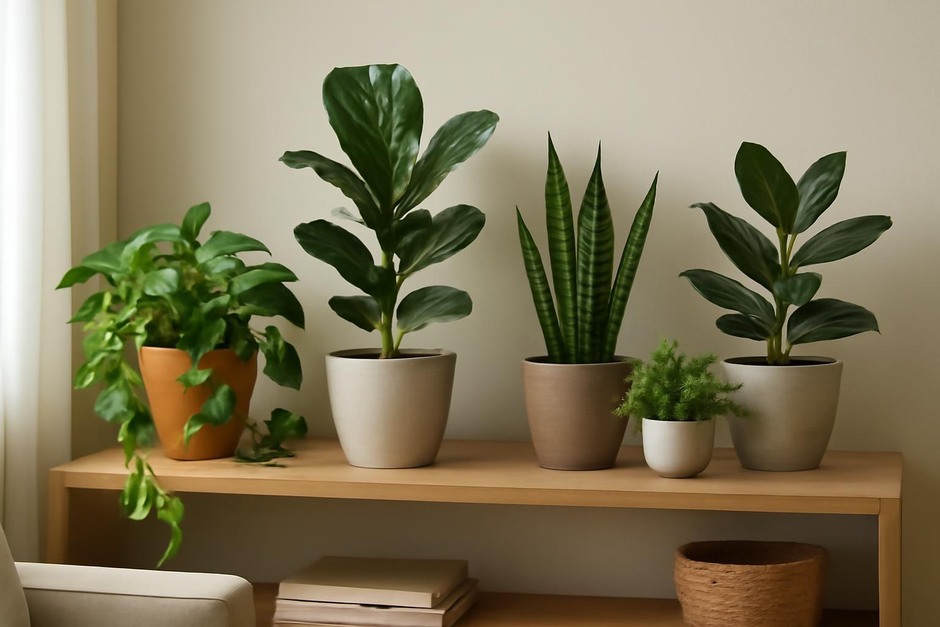
Indoor Plants: A Calm Checklist of Common Care Mistakes and How to Correct Them
Many of us bring plants inside to soften corners and clean the air, only to discover that looking after them involves a quiet learning curve. The most frequent problems are not dramatic — a pale leaf, a floppy stem, a pot that smells — but they repeat across homes. Below is a calm checklist organized by theme, showing common mistakes and practical corrections that gently restore balance.
1. Light: Misreading What Your Plant Really Needs
Observation: Plants give honest clues about light: stretched stems, faded color, or scorched edges. A frequent mistake is assuming every “bright spot” is suitable for every plant.
- Mistake: Putting a low-light plant directly by a south-facing window. Correction: Learn the plant’s light preference (low, medium, bright indirect, or direct) and test the spot for a few hours. If the leaves bleach or burn, move it back from the glass or add a sheer curtain to diffuse harsh sun.
- Mistake: Rotating plants irregularly or not at all. Correction: Rotate pots a quarter turn each week so growth remains even toward the light source.
- Mistake: Relying on artificial light without checking intensity. Correction: Use full-spectrum bulbs and place them within a realistic distance for your plant type; many need light within a foot or two to matter.
2. Watering: Too Much Routine, Too Little Observation
Observation: Watering is the area where enthusiasm most often backfires. Overwatering is more common than underwatering indoors, yet both leave similar-stress signals.
- Mistake: Watering by schedule alone (e.g., every Monday). Correction: Check soil moisture before watering by slipping a finger an inch or two into the pot or using a moisture meter. Only water when the top layer feels dry for plants that prefer drier conditions.
- Mistake: Letting plants sit in saucers of standing water. Correction: Empty trays after watering and ensure pots have drainage holes. For plants that tolerate moisture, raise pots slightly so air circulates beneath.
- Mistake: Using cold tap water straight from the faucet. Correction: Use room-temperature water and, when possible, let freshly filled water rest for a few hours to reduce chlorine and allow dissolved gases to dissipate.
3. Potting and Soil: Ignoring the Roots’ Living Conditions
Observation: Healthy foliage depends on healthy roots. Compacted soil, tiny pots, and unsuitable mixes are quiet underminers of growth.
- Mistake: Keeping plants in the same pot and soil year after year. Correction: Repot every 12–24 months or when roots circle the pot. Fresh soil restores nutrients and improves drainage.
- Mistake: Using garden soil or a single universal mix for every plant. Correction: Match soil to plant needs: add perlite or coarse sand for succulents, peat or coir for moisture-retentive mixes, and extra organic matter for hungry foliage plants.
- Mistake: Choosing a decorative container with no drainage. Correction: Use an inner plastic pot with holes inside a decorative outer pot, or add a layer of gravel only when you can avoid water pooling at the base.
4. Pests and Disease: Early Detection Over Radical Treatment
Observation: Many pest issues start small and are manageable if caught early. A heavy-handed response can stress plants further.
- Mistake: Waiting for visible damage before checking. Correction: Inspect undersides of leaves and nodes weekly. Look for sticky residue, webbing, or tiny moving specks — early signs of aphids, mites, or scale.
- Mistake: Applying strong chemical treatments as a first step. Correction: Try manual removal (wipe leaves, use a soft shower) and gentle remedies (insecticidal soap, neem oil) in concentrated but measured applications. Isolate affected plants until resolved.
- Mistake: Ignoring subtle disease indicators like soft stems or a sour pot smell. Correction: Remove affected material, reduce watering, and consider repotting with fresh, sterile soil if root rot is suspected.
Conclusion: Small course corrections usually restore a plant’s health more reliably than dramatic changes. Treat observations as invitations to experiment gently: adjust light a little, change watering habits incrementally, refresh soil when needed, and check plants regularly for pests. Over time these calm, consistent measures turn most early mistakes into routine habits that help plants thrive in the rhythms of home life.