Top-Watering or Sub-Irrigation: Choosing the Best Watering Method for Container Plants
Water is the most frequent daily decision for anyone who keeps plants in pots. Two straightforward approaches dominate: top-watering (pouring water onto the soil surface) and sub-irrigation (supplying water from a reservoir so roots take it up). Both are useful; which one you choose depends on plant type, container, season, and how much time you want to spend watering. Below is a clear comparison followed by practical guidance to help you decide.
Two approaches: What they are and how they work
Top-watering (watering from above)
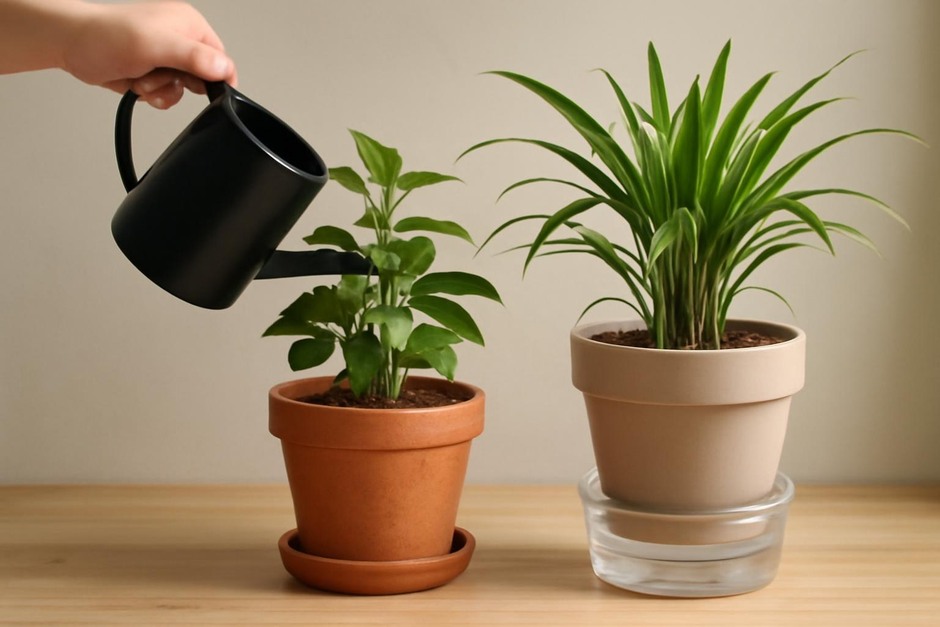
Top-watering is the familiar method: pour water onto the potting mix until water drains from the bottom, or damp the surface for small pots. It mimics natural rainfall and is easy to do with a watering can, hose, or kitchen jug.
- How it feels: Immediate—soil surface wets first, then water percolates down.
- Best for: Most outdoor containers, large shrubs in pots, and plants that tolerate occasional drying between waterings (roses, many herbs, annuals).
- Pros: Flushing salts from the soil, uniform wetting when done deeply, easy to judge drainage and runoff.
- Cons: More frequent attention for thirsty plants, can compact fine soils if poured too forcefully, leaves and blooms may get wet (risk for some fungi), and it can be wasteful if runoff is excessive.
Sub-irrigation (bottom watering and reservoir systems)
Sub-irrigation means providing water from below so capillary action draws moisture into the potting mix. This includes simple bottom-watering (placing a pot in a tray of water for a time) and dedicated self-watering containers with reservoirs and wicking systems.
- How it feels: The mix moistens from the bottom up; surface may stay drier longer.
- Best for: Houseplants, seedlings, and moisture-loving plants (some vegetables and tropicals). Also useful if you travel or want a lower-maintenance routine.
- Pros: Encourages deeper root growth, reduces surface evaporation, keeps leaves dry (lower disease risk for foliage), and is convenient for steady moisture without daily attention.
- Cons: Salt buildup in the soil can occur without periodic flushing, not all mixes wick well, and overly wet conditions can lead to root rot in plants that dislike constant moisture.
Side-by-side comparison
- Water use: Sub-irrigation can be more efficient by cutting evaporation; top-watering often wastes more through surface runoff.
- Salt management: Top-watering flushes salts; sub-irrigation requires occasional thorough watering from above to leach salts.
- Root development: Sub-irrigation encourages roots to grow downward; top-watering can leave roots concentrated near the surface if watered shallowly.
- Frequency: Top-watering often needs more frequent attention in warm weather; sub-irrigation can stretch intervals, especially with reservoirs.
- Suitability by plant: Succulents and some Mediterranean herbs prefer dryer cycles—top-watering and careful drying are better. Seedlings, moisture-loving greens, and many houseplants benefit from sub-irrigation.
- Effort and cost: Top-watering requires only a watering can. Self-watering pots or reservoirs are an upfront investment but reduce daily effort.
How to choose: A practical checklist
Answer these questions to decide which approach to adopt for a given plant or situation:
- What plant is it? If it prefers steady moisture (tropical houseplants, lettuces), lean toward sub-irrigation. If it likes to dry between drinks (lavender, rosemary, many succulents), top-watering is safer.
- How often can you check plants? If you travel or want a low-effort routine, sub-irrigation with a reservoir provides more resilience. If you enjoy daily care or are frequently home, top-watering gives finer control.
- Container type and soil: Dense clay pots and heavy mixes may wick poorly—top-watering is simpler. Lightweight, porous mixes with a wicking layer work well in sub-irrigation systems.
- Seasonal needs: In summer, thirsty plants may need top-watering to meet fast evaporation. In cool seasons, reservoirs help prevent over-drying from indoor heating.
- Water quality concerns: If your tap water is hard, plan to flush the soil periodically if using sub-irrigation to avoid salt buildup.
Practical routines and hybrid options
You don’t have to choose one method forever. Many gardeners use both. A helpful routine:
- Use sub-irrigation or reservoirs for houseplants and seedlings to keep moisture steady.
- Top-water larger outdoor pots or plants that need regular flushing and prefer drying periods.
- Every 4–8 weeks, give self-watered containers a top-watering to leach salts and refresh the medium.
- Use a moisture meter or the finger test (stick a finger 2–3 cm into the mix) to check real conditions rather than relying only on fixed schedules.
Choosing between top-watering and sub-irrigation is less about right or wrong and more about matching plants, containers, and your lifestyle. With the checklist above you can set up a watering routine that keeps leaves healthy, roots happy, and your daily life simpler—season by season.