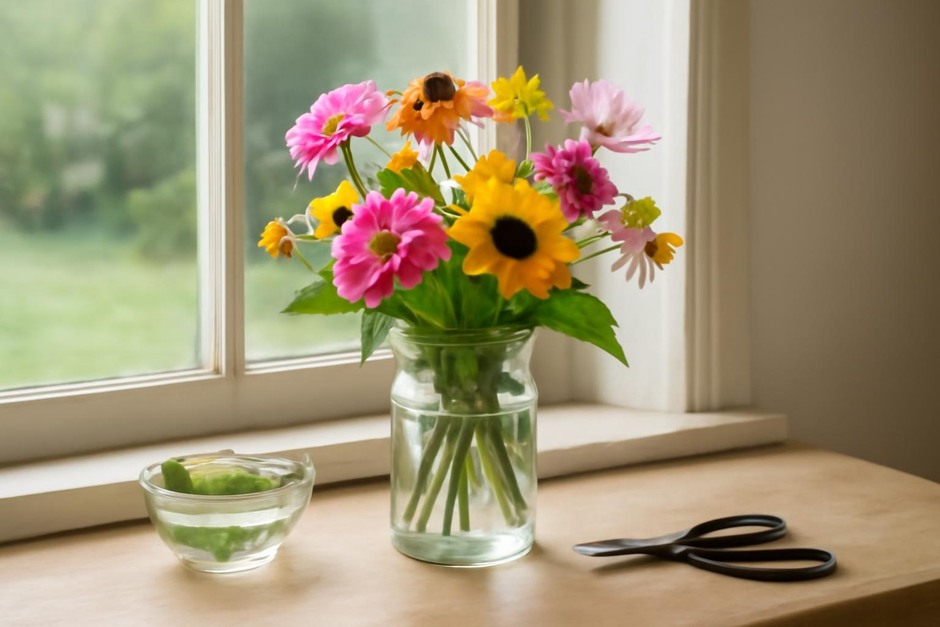
Extending Vase Life: Principles and Small Experiments for Longer-Lasting Garden Blooms
Problem
You bring a handful of garden blooms to the kitchen, arrange them in a vase and by the next day the petals are limp, stems droop, or cloudy water smells. The disappointment is familiar: cut flowers look magnificent on the plant but decline quickly once severed. Understanding a few basic problems—air entering stems, bacterial growth in water, temperature and ethylene exposure, and the plant’s own respiration—lets you apply small, testable solutions rather than guessing.
Principles
Below are the core principles that govern how long cut flowers remain attractive in water. Each principle can be observed with a simple tabletop experiment.
1. Stem water uptake and air embolisms
Cutting a stem can introduce air into the xylem (the tubes that move water), and some stems dry at the cut end. Recutting stems and avoiding letting air enter the cut stem help restore water flow.
2. Bacterial growth and water quality
Bacteria and fungi multiply in nutrient-rich vase water, clogging stem pores and shortening life. Clean containers, fresh water, and simple food/acid combinations can slow microbial growth and feed the flowers modestly.
3. Temperature and respiration
Warmer temperatures increase respiration and water loss. Keeping arrangements cool, out of direct sun and away from heat sources, reduces metabolic strain and extends freshness.
4. Ethylene sensitivity and nearby fruit
Some flowers are sensitive to ethylene, a gas produced by ripening fruit, which accelerates petal drop and senescence. Keeping flowers away from ripening fruit or other ethylene sources preserves quality.
Examples (Three Small Experiments)
Each experiment is designed for a small kitchen test: pick three similar stems (same variety, similar age and size) and designate treatments A, B, and C. Use a clear notebook or phone photo to record daily observations: upright/turgid, petal firmness, first signs of wilting, and water clarity.
-
Recutting under water vs dry cut
Procedure: Fill two clear jars with room-temperature water. Submerge one stem’s base in water and recut 1–2 cm under the surface, then place in the jar. For the second stem, cut the base in air and place immediately in water. Keep a third stem as an untouched control (no recut).
Principle tested: air embolisms and interrupted water uptake. Expectation: stems recut under water usually stay turgid longer.
-
Water only vs simple sugar–acid preservative
Procedure: Use three identical jars and stems. Jar 1: plain water. Jar 2: water with a simple preservative (for example, about 1 tablespoon white sugar and 1 tablespoon white vinegar per liter of water). Jar 3: water changed daily without additives. Observe water cloudiness and stem performance.
Principle tested: food for respiration vs microbial growth. Expectation: preservative can feed the bloom while the acid helps slow bacteria; daily water change can also perform well by limiting microbes.
-
Cool location vs warm windowsill vs near ripe fruit
Procedure: Place three identical arrangements in different microenvironments: a cool shady spot, a warm bright windowsill, and a countertop beside a bowl of ripening apples or bananas. Observe how quickly petals soften and fall.
Principle tested: temperature and ethylene exposure. Expectation: cooler spots preserve freshness; proximity to ripe fruit speeds decline for ethylene-sensitive blooms.
Concise Practice Checklist
- Harvest timing: cut blooms early in the morning when stems are full of moisture.
- Clean tools and vases: wash shears and containers to reduce microbes.
- Recut stems: cut 1–2 cm with a sharp knife or shears; do so under water when possible.
- Remove lower leaves: strip leaves that would sit below the waterline to prevent rot.
- Use fresh water: fill with room-temperature water and refresh every 1–3 days.
- Simple preservative option: a small amount of sugar plus a splash of vinegar in the vase can help; alternatively, change water daily.
- Placement: keep arrangements cool, out of direct sun and away from ripening fruit or heat sources.
- Observe and adjust: try the tabletop experiments to learn which methods work best for the varieties you grow.
These principles and small experiments connect observation with cause: the same habits that help in a formal bouquet—cleanliness, proper cutting, cool placement—are easy to practice at home and can make a noticeable difference in how long your garden’s blooms brighten the kitchen table.