Traditional Fermentation vs Quick Refrigerator Pickles: Historical Roots and How to Choose
Preserving vegetables through souring or vinegar brines is an ancient household craft. From salt-packed cellars and buried crocks to bustling market stalls and modern fridges, the methods people use have long reflected local resources, climates, and tastes. Two approaches remain popular in home kitchens today: traditional lacto-fermentation, which relies on salt and naturally present microbes, and quick refrigerator pickles, made fast with vinegar and cooled for storage. Each route carries a distinct history and yields different textures and flavors. Below, we compare the two and offer practical guidance to help you choose the best method for your pantry and palate.
Comparison of Approaches
Historical context
Lacto-fermentation dates back millennia: long before refrigeration, people used salt, cool cellars, and tightly packed vessels to preserve harvests. Think sauerkraut in northern Europe, kimchi in Korea, and regional variations around the world. The process preserves vegetables by creating an acidic environment over time. By contrast, vinegar-based pickling as we know it became widespread where vinegar was affordable and stable; immersing produce in acidic brines provided immediate preservation and a different flavor profile, well suited to trade and urban settings.
Time and process
Traditional lacto-fermentation is a slow art. Vegetables and a measured amount of salt are packed into jars or crocks and left at cool, steady temperatures for anywhere from a few days to several weeks. During this time subtle chemical changes develop complex tangs and layered flavors. Refrigerator pickles are fast: vegetables are blanched or packed raw, a hot vinegar-sugar-salt brine is poured over them, and the jars cool before being refrigerated. They’re ready in hours to a couple of days.
Flavor and texture
Fermented jars tend to offer depth, evolving over time with nuanced sourness and a softened, sometimes pleasantly effervescent texture. Refrigerator pickles deliver bright, immediate acidity, often crisp and clean in profile, with sweetness or spice tuned by the brine.
Equipment and storage
Lacto-fermentation favours crocks or wide-mouth jars, weights to keep vegetables submerged, and cool, stable space; traditional setups sometimes include loose lids or airlocks to allow gases to escape. Refrigerator pickling requires a reliable stove and fridge space but fewer environmental constraints—no long cellar necessary.
Reliability and safety considerations
Both methods are time-honored when practiced with care. For fermentation, attention to clean vessels, correct salt ratios, and keeping produce submerged minimizes spoilage. For quick pickles, boiling the brine and using clean jars reduces contamination risk. If you’re unfamiliar with either method, start small, follow established ratios and simple recipes, and monitor jars as they develop.
How to Choose Between Them
Choosing a method comes down to three practical questions: how much time you have, what flavor and texture you want, and where you’ll store the jars.
- Do you want depth and evolution, or quick brightness? Choose lacto-fermentation for evolving complexity and subtle tangs. Pick refrigerator pickles when you need a bright, crisp condiment fast.
- How much time and attention can you offer? If you enjoy the slow process of checking jars, tasting as flavors change, and working with ambient temperatures, fermentation is rewarding. If you prefer a nearly hands-off, quick result, go with a vinegar brine and the fridge.
- What storage space do you have? Limited to an apartment fridge? Quick pickles are convenient. If you have a cool pantry or cellar and want to store jars for months at room temperature (depending on method), traditional fermentation may fit better.
- How important is crispness? Quick pickles often retain a crisper bite, especially with an ice bath or a short soak in the brine. Fermented vegetables can remain crisp too, but they often soften as they age.
Practical starting points
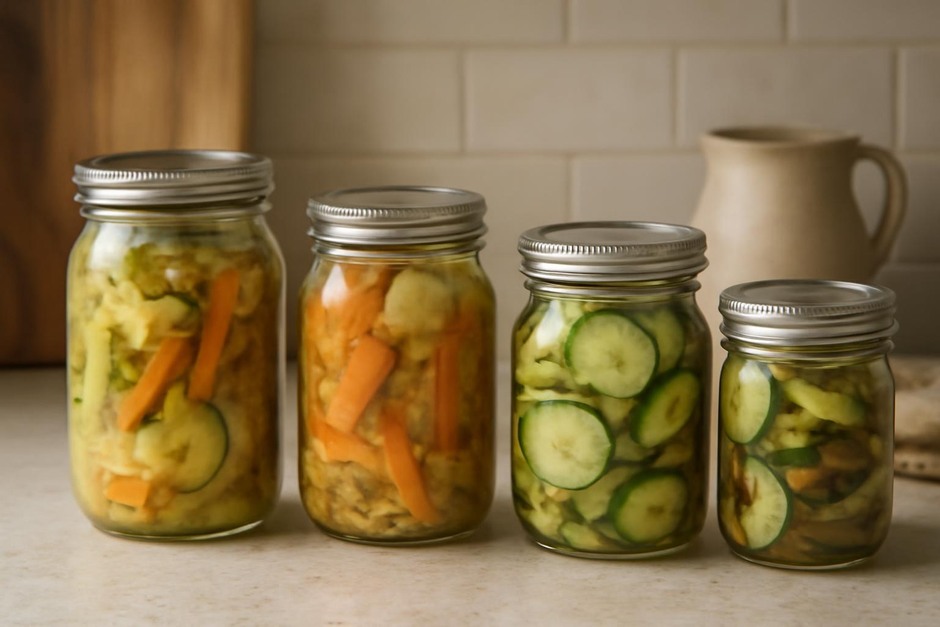
If you’re undecided, try both with the same vegetable—cucumbers, carrots, or cabbage make good comparisons. For fermentation, weigh your vegetables and use a salt solution or measured dry-salt ratio; keep them submerged and taste after 3–7 days. For quick pickles, simmer a vinegar-brine (equal parts vinegar and water is a common starting point), pour over packed jars, let cool, then refrigerate; samples are usually ready within a day.
Whichever path you choose, begin modestly and keep notes: the variety of vegetable, salt or vinegar ratios, room temperature, and tasting dates. Over a few small experiments you’ll learn how time, temperature, and seasoning shape the final jar. Both methods connect you to a living culinary tradition—one emphasizing patience and transformation, the other immediacy and convenience—so let your pantry needs and appetite lead the way.