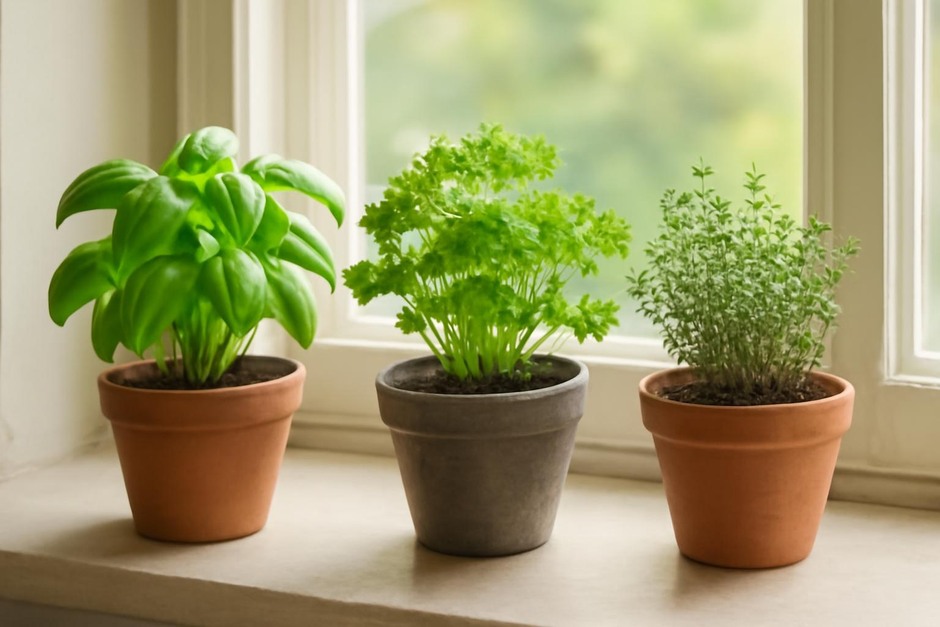
Indoor Herb Rotation: A Simple Routine to Keep Kitchen Pots Productive All Year
Problem: Why many indoor herbs weaken over time
People who keep a few herb pots in the kitchen often find the plants start well but drop in vigor after a few months. Leaves become sparse, stems get leggy, flavor fades, or one pot outgrows the others. The core issue is a mismatch between steady household conditions and plants’ changing needs: light shifts with the seasons, soil slowly loses structure and nutrients, and small pots can become crowded. Without a simple plan, good intentions—watering, occasional trimming—don’t add up to steady productivity.
Principles: The few habits that actually matter
Adopt these basic principles to form an effective rotation routine. Each is short to explain and easy to repeat.
- Light tracking: Note the brightest spot and how its light changes through the day and seasons. Rotate pots to match each plant’s preferred light level rather than assuming one spot suits all.
- Regular light pruning: Frequent small trims encourage bushy growth and prevent legginess. Removing flower buds (for many culinary herbs) redirects energy into leaves.
- Soil refresh: Over time, soil compacts and nutrients decline. Refresh the topsoil and repot on a seasonal schedule to restore drainage and food for roots.
- Consistent, shallow watering: Small pots prefer more frequent, shallow watering rather than occasional deep soaking. Check weight of pots or the soil surface to gauge moisture.
- Micro-nutrient top-ups: A light feeding with a balanced organic plant food every 4–6 weeks keeps flavor and growth steady without overfertilizing.
- Balance crowded pots: When one herb outgrows a spot, move it to a larger pot or split the plant. Crowding increases disease risk and reduces individual plant performance.
Examples: Three short rotation schedules for common situations
Choose the example closest to your conditions and adapt the times to your week. Each routine emphasizes a short, repeatable set of actions.
1. Sunny windowsill (4–6 hours direct sun)
- Daily: Check soil by weight in the morning; water lightly if the pot feels noticeably light.
- Weekly: Quick snip—trim back any stems that are more than 2–3 times the leaf length to encourage branching.
- Monthly: Rotate pots one position to even out sun exposure; pinch off flower buds.
- Seasonally (every 3–4 months): Replace top 2–3 cm of soil and feed lightly.
2. Bright, indirect light (east or north-facing kitchen)
- Daily: Check soil surface; water when top 1–2 cm feels dry.
- Weekly: Trim selectively to maintain shape and remove any yellowing leaves.
- Monthly: Move pots to the brightest spot for 2–3 days to boost growth, then return to regular place.
- Seasonally: Refresh soil and consider moving more sun-loving herbs (basil, rosemary) to an artificial light source for winter.
3. Low light or shared countertop (limited direct sun)
- Daily/Every other day: Water sparingly; low light reduces evaporation so pots need less water.
- Weekly: Trim to keep compact; remove any weak stems to concentrate energy on healthy growth.
- Monthly: Turn pots toward the brightest window for several hours on sunny days.
- Seasonally: Reposition the most tender herbs under a grow lamp if available; otherwise replace with hardier herbs (mint, chives, parsley).
Practice checklist: A concise, repeatable routine
Use this checklist each week. It takes about 5–15 minutes for a small group of pots and can be a calming kitchen habit.
- Daily (1 minute): Quick soil check and light watering only if pot feels light or top is dry.
- Weekly (5–10 minutes): Trim for shape and flavor, pinch flowers, discard a few older outer leaves for freshness.
- Monthly (10–15 minutes): Rotate positions to equalize light, inspect for crowding, adjust pot size if needed.
- Every 3–4 months: Refresh topsoil or repot small herbs, and give a light balanced feed.
Keeping indoor herbs productive is less about one dramatic action and more about a steady, short routine tuned to light and space. Start with the checklist above, notice how each plant responds, and adjust the timing to your kitchen’s rhythm. Over a few seasons you’ll have a reliable rotation that keeps flavor, leaf density, and plant health in balance.